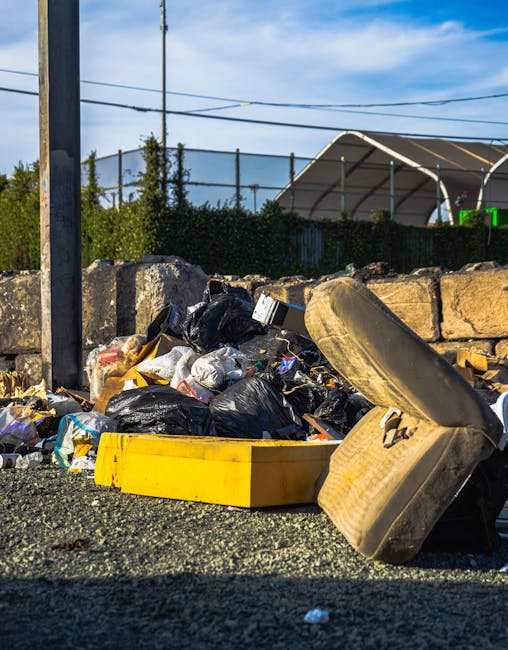
What to know about bulky rubbish permits in Plumstead

If you're sorting out a bulky item clearance in Plumstead, the permit question can be the bit that catches people out. One minute you're planning to get rid of an old sofa, broken wardrobe, or a pile of builders' offcuts; the next, you're wondering whether you need permission before anything can be left on the street. That's exactly why understanding what to know about bulky rubbish permits in Plumstead matters. It can save you delays, avoid awkward surprises, and help you choose the cleanest, simplest route for disposal.
To be fair, bulky waste rules are rarely exciting. But they are practical, and in a place like Plumstead, practical matters. Whether you're clearing a flat, tackling a garage that has quietly become a storage unit, or dealing with a one-off item that won't fit in the car, the right permit or collection approach keeps everything tidy and on the right side of local expectations. In this guide, we'll walk through how it works, when permits are relevant, the main mistakes people make, and how to approach the job with far less stress.
For wider context on domestic and estate clearances, it can also help to understand services like house clearance, flat clearance, and general waste removal, since bulky items are often just one part of a bigger clear-out.
Why What to know about bulky rubbish permits in Plumstead Matters
Bulky waste sounds straightforward until you try to move it through a real neighbourhood. A mattress leaning against a wall, a fridge left outside overnight, or a few heavy pieces of furniture on the pavement can quickly become an issue if the timing or permissions are wrong. In Plumstead, that matters because public spaces need to stay safe, accessible, and free from fly-tipping risks.
The permit question matters for another reason too: different disposal routes suit different situations. A council collection, private clearance, skip hire, and pre-booked bulky item removal all work differently. If you pick the wrong option, you may pay more, wait longer, or discover that the collection can't go ahead as planned. No one wants that on a wet Wednesday morning with a hallway full of cabinets.
It also matters from a neighbour-relations point of view. Bulky items left out at the wrong time can block footpaths, attract complaints, or create a messy look that spreads the frustration fast. In busy streets and shared housing, a little planning goes a long way. That is especially true if you're on a tight terrace road, where access is already a bit of a puzzle.
For people dealing with mixed household clutter, the topic often overlaps with broader clearance jobs such as garage clearance, loft clearance, and home clearance. Once the items are grouped properly, the decision becomes much easier.
Practical takeaway: the "permit" part is not just paperwork. It affects timing, placement, safety, and whether your bulky waste removal is actually allowed to happen the way you planned.
How What to know about bulky rubbish permits in Plumstead Works
In plain English, a bulky rubbish permit is permission to place certain waste items in a particular location, often on or near the public highway, for collection or removal. Depending on the situation, you may not need a separate permit at all if your waste is collected directly from your property or if it stays entirely within private land. That distinction is the bit people often miss.
The process usually starts with the type of item and where it will be positioned. A sofa waiting inside your front room is one thing. A sofa left outside on a pavement, even for a short time, is another. If a skip, hoist, sack, or collection vehicle is involved, the access arrangement can determine whether permission is needed and who is responsible for arranging it.
In practical terms, bulky rubbish permits are often linked to collections that need space, notice, or temporary placement on public land. That could include a large load waiting for pickup, a container placed on a road, or a managed clearance where the item stream is too large for normal bin services. The exact rules can vary depending on the route you use, so the safest approach is to check before you book rather than after the item is already outside.
Here's the simple way to think about it:
- Private property only: often the simplest route, with fewer permission issues.
- Public pavement or road space: more likely to require specific approval or controlled timing.
- Council bulky collection: may have its own booking rules and item limits.
- Private clearance service: usually handles the lifting and transport, but access and placement still matter.
When people ask about bulky rubbish permits in Plumstead, they are often really asking, "Can I just put this out and be done with it?" Honest answer: sometimes yes, sometimes no. The details matter, and a quick check now is much better than having to move everything back indoors later.
Key Benefits and Practical Advantages
The biggest benefit of getting the permit side right is simple: less hassle. You reduce the risk of delays, extra fees, and last-minute reshuffling. That alone is worth a lot when you are already juggling work, school runs, or a move-out deadline.
There are also some less obvious advantages. Proper planning helps protect shared access points, keeps items from being damaged by weather, and lowers the chance of blocked walkways or neighbour complaints. It also makes it easier for removal teams to work efficiently, which can reduce the time your items spend sitting around. On a windy day, that matters more than people expect. A loose bit of packaging can become a small drama very quickly.
From a value perspective, understanding the permit route helps you choose the right disposal method. For example, if you only have one or two large items, a dedicated furniture collection may be simpler than arranging something more heavyweight. If you are clearing several rooms, a broader service may make more sense. The point is not to overcomplicate it; it is to match the method to the job.
Benefits often include:
- better compliance with local rules and property access requirements
- less risk of missed collections or wasted journeys
- safer movement of large items through narrow spaces
- better planning for shared entrances and residential streets
- cleaner disposal of bulky pieces that do not belong in normal bins
If you are deciding between separate removal categories, services such as furniture clearance and mattress and sofa disposal can be more efficient than treating every item as generic rubbish. That small bit of specificity often saves time.
Who This Is For and When It Makes Sense
Bulky rubbish permits are most relevant for people who need to move large, awkward, or multiple items in a way that interacts with public space or scheduled collections. If your situation is just a single item leaving from your driveway, you may not need much more than a clear booking and a sensible pickup plan. But once the removal touches the pavement, road, or communal space, the permit question gets louder.
This usually makes sense for:
- homeowners clearing out bulky household items before a sale or renovation
- tenants moving out of flats, maisonettes, or shared homes
- landlords preparing a property between occupancies
- families dealing with inherited belongings or long-term clutter
- small businesses removing old office furniture or storage waste
It also comes up after renovation projects. Builders' waste, broken units, packaging, and offcuts can become a proper headache if they are left where they should not be. In that case, a dedicated route such as builders waste clearance may be a better fit than a general bulky item plan.
Plumstead has its share of narrow streets, terraces, and mixed housing layouts, so access is often a bigger factor than people expect. If your items need to come down stairs, through tight hallways, or past parked cars, it makes sense to think through the route before the collection day. Truth be told, that is where the job either feels easy or turns into a bit of a faff.
Step-by-Step Guidance
Here is a practical way to approach bulky rubbish permits and clearance planning in Plumstead without overthinking it.
- List every item you want removed. Be specific. "Furniture" is broad; "one wardrobe, one mattress, two chairs, one broken desk" is useful. Mixed loads need clearer planning than people assume.
- Check where the items will be placed. Inside the property, on private land, in a shared courtyard, or on the public pavement? That one detail changes the answer more than anything else.
- Decide whether a permit or booking is needed. If the items are staying on a road, footway, or another controlled space, confirm the rules before moving them outside. If in doubt, do not gamble on it.
- Choose the right removal method. A single appliance may only need an appliance-focused service, while a room full of clutter may call for a broader clearance. Matching the method to the load is the smart move.
- Prepare access in advance. Clear hallways, open gates if needed, protect floors, and make sure the crew can reach the items safely. Small prep, big difference.
- Separate anything that needs special handling. Hazardous waste, sharp items, or items with electrical components need more care. Put them aside early rather than on the day of collection.
- Confirm timing and contact details. It sounds basic, but missed calls and unclear arrival windows create avoidable problems. Nobody enjoys waiting around half the afternoon.
- Keep proof of booking or permission. If there is a permit, reference number, or collection confirmation, hold onto it until the job is done.
A small but useful tip: take a photo of the items and the access route before collection day. Not because you expect trouble, but because it helps everyone stay on the same page. It's a tiny thing, but those tiny things often make the day run smoothly.
Expert Tips for Better Results
After plenty of real-world clearances, one lesson keeps repeating itself: the best bulky waste jobs are the ones prepared in layers. First the items, then the access, then the disposal route, then the timing. Simple, yes. But people often do those steps in the wrong order.
One of the best moves is to sort items by type before collection. Furniture, electrical items, garden waste, and general clutter are not always treated the same way. Keeping them grouped makes it easier to choose the right service and avoid surprises. If, for example, you have a broken fridge alongside a sofa and some old shelves, a service such as fridge and appliance removal may need to sit alongside a furniture clearance rather than being bundled in casually.
Another useful habit is to think in terms of liftability. Can one person safely move the item? Does it need two people? Does it need disassembly first? If a wardrobe has to come apart to fit through the stairwell, it is much better to know that before collection day. The same goes for heavy garage items and boxed junk hidden at the back of a loft. People forget what they own. Happens all the time.
A few practical expert tips:
- disassemble large items where possible to make removal safer
- remove personal paperwork or valuables before any clearance
- book earlier if you need a specific date, especially around moves
- ask about recycling and recovery, not just collection
- keep walkways free so items can be moved without risk
And yes, one more thing: if you think an item is "probably fine" to leave out, double-check. Probably is not a plan.
Common Mistakes to Avoid
The most common mistake is assuming all bulky waste works the same way. It doesn't. A sofa, a mattress, a broken appliance, and renovation debris can each follow a different route. If you treat them all as one generic pile, you can end up booking the wrong service or missing a permit requirement.
Another frequent issue is leaving items out too early. People often think an early placement gives them a buffer, but it can create a nuisance and increase the chance of complaints or enforcement attention. If a collection is booked for later in the day, keep the items where they are until the proper time.
Other mistakes include:
- forgetting to check access for narrow hallways or upper floors
- mixing hazardous items in with ordinary bulky waste
- assuming a private drive means no other rules apply
- not confirming whether the collection includes lifting from inside the property
- underestimating how much space large items actually take up
There is also the classic "I thought it would fit in the car" mistake. We have all been there in spirit, if not in practice. A table looks manageable until it is hovering awkwardly above the boot and everyone goes quiet.
If you want to avoid unnecessary charges, it can be worth reading about avoiding hidden rubbish removal charges in Plumstead before you book. That kind of background reading often saves a lot of frustration later.
Tools, Resources and Recommendations
You do not need specialist equipment for most bulky rubbish jobs, but a few simple tools make life much easier. A tape measure can tell you whether the item will fit through doors or stairwells. Gloves help with grip and safety. Sturdy bags, labels, and a basic checklist keep the sorting process under control. Nothing fancy. Just useful.
For larger clearances, a trolley or sack truck can help move heavier items without dragging them across floors. If you are dealing with furniture, an Allen key set or screwdriver may be enough to take things apart. For builders' or renovation waste, durable bags and proper segregation are much more practical than trying to improvise at the last minute.
Here are a few resources and service types worth knowing about:
- pricing and quotes if you want to compare options before committing
- book online if you already know the job and want a straightforward next step
- what can go in a skip if your project is bigger and you are weighing up container-based disposal
- recycling and sustainability if you want to make the most responsible disposal choice
For clothing, furniture, or household pieces that are still usable, think carefully before sending them straight to disposal. In some cases, donation or repurposing may be possible. That can be especially true for sturdy shelving, tables, or unwanted chairs that still have life left in them.
Law, Compliance, Standards and Best Practice
When bulky waste is involved, compliance is mostly about safe handling, correct placement, and responsible disposal. You do not need to become a rules expert overnight, but you do need to avoid assuming the street is an open storage area. It isn't.
In practice, the main expectations are usually straightforward: do not obstruct public access, do not place waste out illegally, and do not allow items to become a hazard to pedestrians, vehicles, or neighbours. If a permit, booking, or permission is needed, it should be arranged before the item goes outside. That keeps things clear and avoids avoidable disputes.
Best practice also includes separating hazardous or specialist items from ordinary bulky waste. Paints, chemicals, sharps, and some electrical goods should not be treated like ordinary household clutter. Likewise, fridge and freezer disposal may need specific handling because of the materials involved. A dedicated service such as hazardous waste disposal is more appropriate where risk is involved.
Insurance and safe working practices matter too, especially if movers are carrying heavy items through tight or shared spaces. Proper lifting techniques, suitable equipment, and attention to access help reduce the risk of damage or injury. If you are comparing providers, it is sensible to look at insurance and safety alongside cost. Cheap and careless is not a bargain. Not really.
For businesses, the expectations can be a touch more formal, particularly if office furniture, records, or clearance materials are involved. In that situation, business waste removal or office clearance may be more suitable than a general domestic arrangement.
Options, Methods and Comparison Table
If you are trying to choose the right route for bulky rubbish in Plumstead, it helps to compare the main methods side by side. Different jobs need different solutions. A single sofa is not the same as a full house clear-out, and a back garden full of old timber is not the same as one broken appliance.
| Option | Best for | Strengths | Watch-outs |
|---|---|---|---|
| Council-style bulky collection | One-off household items | Simple and familiar | May have item limits, timing rules, or booking windows |
| Private bulky clearance | Mixed items or tight deadlines | Flexible, often includes lifting and loading | Price depends on load size and access |
| Skip hire | Longer projects and mixed waste | Good for ongoing work | May need space and placement approval |
| Dedicated furniture or appliance removal | Specific large items | Targeted and efficient | Not ideal for mixed loads |
| Full property clearance | Moves, probate, or major decluttering | Best for bigger, more complex jobs | Can feel like overkill for a single item |
As a rule of thumb, the fewer items you have, the more targeted your solution can be. The more mixed and awkward the load, the more useful a flexible clearance service becomes. There is no magic answer, just the right tool for the job.
Case Study or Real-World Example
A typical Plumstead scenario goes like this. A family is preparing to move from a first-floor flat and discovers they have a wardrobe, a mattress, an old armchair, and a broken TV stand that will not fit in the lift. The hallway is narrow, the stairwell is tight, and the items can't simply be carried to the kerb without creating a blockage.
At first, they assume they can put everything outside the evening before collection. Then they realise the street is busy, neighbours use the pavement constantly, and there is no easy spare space. After checking access and the type of removal needed, they choose a more controlled pickup arrangement that handles the lift from inside the property. The items are taken out safely, the walkway stays clear, and the move remains on schedule. Not glamorous, but very effective.
What made the difference? They sorted the items early, measured the awkward wardrobe, and stopped treating the pavement as a temporary storage zone. That tiny bit of planning saved them from a last-minute scramble. In real life, that is usually how good clearances happen: not by luck, but by avoiding the obvious traps.
A similar approach works for garage or garden clear-outs. If the items are a mix of broken furniture, boxes, and outdoor waste, services such as garden clearance or garage clearance may help keep the job organised rather than turning it into a half-finished weekend saga.
Practical Checklist
Use this checklist before you arrange any bulky rubbish collection in Plumstead. It is simple, but it works.
- Make a full list of items to be removed
- Check whether any item is electrical, hazardous, or specialist waste
- Confirm whether the items will stay on private land or touch public space
- Measure doorways, stairs, and tight corners if access looks awkward
- Decide whether you need a targeted removal or a full clearance
- Remove valuables, paperwork, and personal items
- Check the booking time and keep confirmation details handy
- Make sure the path to the items is clear and safe
- Separate anything that might need different handling
- Ask about recycling or reuse where appropriate
Expert summary: if you prepare the items, check the access, and confirm the permission requirements before moving anything outside, you will avoid most of the headaches people run into with bulky waste. That's the real trick. Not fancy, just sensible.
Conclusion
What to know about bulky rubbish permits in Plumstead comes down to three things: where the items are going, how they will be collected, and whether public space is involved. Once you understand those basics, the rest becomes much easier to plan. You can choose the right type of removal, reduce the risk of delays, and keep everything tidy for yourself and the people around you.
For many households and businesses, the smartest approach is to plan early, sort the load carefully, and use a service that matches the job instead of forcing everything into one generic solution. That little bit of forethought is often the difference between a smooth day and a messy one. And honestly, life throws enough at you already without a bulky sofa making things worse.
If you are comparing services or weighing up the best way to clear bulky items safely, take a moment to review your options and choose the route that fits your space, timing, and item type. The right choice tends to be the calmest one, and calm is underrated.
Get a free quote today and see how much you can save.
Frequently Asked Questions
Do I always need a permit for bulky rubbish in Plumstead?
No, not always. If the items are being removed directly from private property and never need to sit on public land, a permit may not be necessary. If you plan to place items on the pavement, road, or another controlled space, that is where permit or booking rules are more likely to apply.
What counts as bulky rubbish?
Bulky rubbish usually means items that are too large, awkward, or heavy for normal household bins. That often includes sofas, wardrobes, mattresses, tables, appliances, and similar pieces. In practice, it's anything that makes you step back and think, "Right, that's not bin-day material."
Can I leave bulky items outside overnight?
Usually, you should not assume that is acceptable. Leaving items out overnight can create safety issues, block paths, or lead to complaints. It is better to keep them inside or on private land until the proper collection time.
What if my bulky item is a fridge or freezer?
Fridges and freezers often need special handling because of the materials and components involved. A dedicated appliance removal route is usually more appropriate than treating them as general waste. It's one of those jobs that looks simple until it isn't.
Is skip hire better than bulky item collection?
It depends on the job. Skip hire is useful for ongoing projects or mixed waste, while bulky item collection is often better for a few large items. If space is limited, collection can be easier than finding somewhere to place a skip.
How do I know which disposal option is right?
Start with the number of items, their size, and where they are currently stored. Then think about access, timing, and whether any items need special handling. That usually points you toward the right option quite quickly.
Can bulky rubbish be collected from inside my property?
Often, yes, depending on the service you choose. This can be especially helpful for flats, upper floors, or homes with narrow access. Always check whether lifting from inside is included before booking.
What should I do with items that are still usable?
If something is still in good condition, consider reuse, donation, or repurposing before disposal. It is often the better-value and more responsible choice. For guidance on practical reuse ideas, some people also explore clearance and sustainability resources before deciding.
Are there extra concerns for shared flats or communal areas?
Yes. Shared entrances, corridors, and communal yards can complicate access and timing. You will usually want to be extra careful about blocking shared spaces, and you may need to coordinate with neighbours or building management.
How far in advance should I arrange bulky rubbish removal?
The earlier, the better, especially if you need a specific date or have several large items. Booking in advance also gives you time to measure access, sort the load, and avoid last-minute surprises.
What happens if I put bulky waste out without permission?
That can create problems, including complaints, obstruction issues, or the need to move everything back. In some cases it can also lead to further action depending on the circumstances. Best to check first, honestly. It saves hassle.
Can a clearance service help me with mixed items?
Yes, and that is often where a private clearance service is most useful. Mixed loads of furniture, appliances, clutter, and bagged waste are common, and a good service can help separate and handle them properly rather than treating everything as one pile.
What is the safest way to handle very heavy furniture?
Measure first, clear the route, and use the right number of people for the lift. If something feels too heavy or awkward, it probably is. Disassembly, proper lifting technique, and a planned path are usually safer than trying to muscle through it.
Where can I get more help with bulky clearance planning?
It helps to look at related pages on pricing, booking, and the types of waste involved, especially if your job includes furniture, appliances, or mixed household items. A little planning upfront makes the whole thing much easier to deal with.