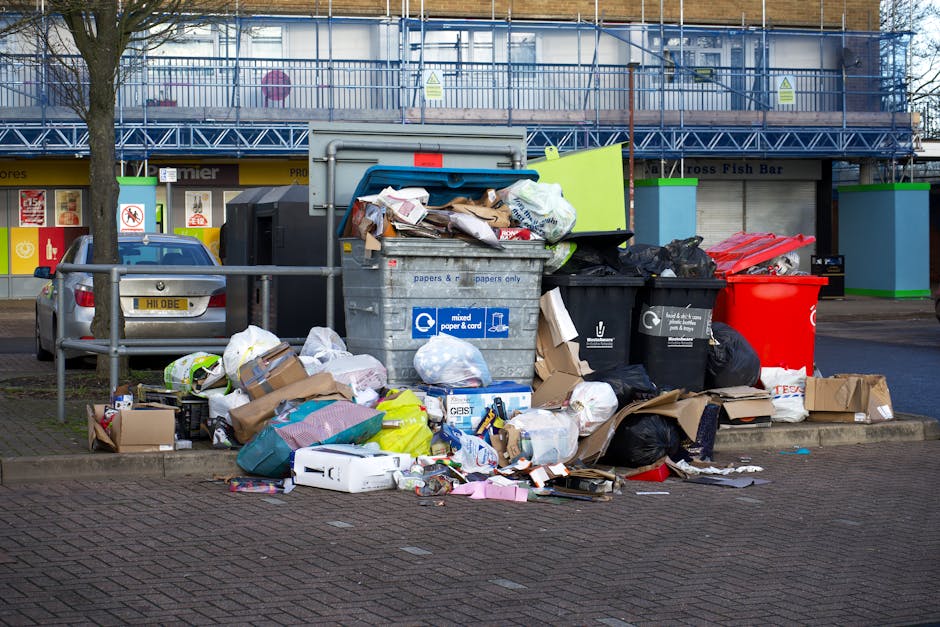
How to avoid hidden rubbish removal charges in Plumstead

Rubbish removal sounds straightforward until the final bill lands and a few extra lines have quietly appeared on it. If you are trying to work out how to avoid hidden rubbish removal charges in Plumstead, you are really trying to avoid a pretty common headache: vague quotes, surprise add-ons, and last-minute "extras" that were never discussed properly. In Plumstead, where many jobs involve tight access, flats, gardens, lofts, or mixed household waste, clarity matters more than ever. The good news? Once you know what to ask and what to watch for, those hidden costs get much easier to spot.
This guide walks you through the pricing traps, the questions that actually matter, and the simple checks that save money without turning the process into a drama. No fluff, no guesswork, just the kind of practical advice that helps you book with confidence.
Why How to avoid hidden rubbish removal charges in Plumstead Matters
Hidden charges are frustrating because they often appear after you have already committed time, energy, and often a bit of stress to clearing the clutter. One minute it is a simple "clear the garage" job; next minute you are being told the mattress, the old fridge, the builder's rubble, or the awkward side-access walkway counts as an extra. Sound familiar?
In Plumstead, that risk can be even higher if the property is a maisonette, a terraced house with limited access, or a flat with stairs and no lift. To be fair, not every extra cost is unfair. Sometimes a job really does involve more labour, more waste types, or special handling. But the important thing is that you know about those costs before the team turns up.
Clear pricing protects you in three ways:
- it helps you compare like-for-like quotes
- it reduces disputes on the day
- it makes it easier to choose the right service for the amount and type of waste
If you are clearing a whole property, a few extra bags might seem small at first. Then the pile grows, the van fills faster than expected, and suddenly the quote looks nothing like the original conversation. That is exactly why pricing transparency matters so much.
How How to avoid hidden rubbish removal charges in Plumstead Works
Most rubbish removal services price jobs using a mix of volume, weight, waste type, access difficulty, and labour time. In plain English, that means the cost depends not just on how much there is, but what it is, where it is, and how difficult it is to move.
A basic quote may cover one straightforward load with standard household waste. But the final total can rise if any of the following apply:
- the waste includes heavy materials such as soil, rubble, tiles, or plaster
- items need dismantling before removal
- there is restricted parking or long carrying distance
- the property is upstairs or has awkward access
- you add more items after the quote has been agreed
- there are items that need special handling, such as fridges or other appliances
That does not automatically mean a provider is being sneaky. A proper service should simply explain the pricing structure in advance. The problem starts when the quote is too vague to be useful. "From GBPX" can be fine as a starting point, but only if the business also explains what changes that figure.
If you want a clearer benchmark, take a look at the site's pricing and quotes information before you book. It is a sensible place to start when you are trying to compare providers on a like-for-like basis, rather than on a hopeful guess.
It also helps to understand what kind of clearance you actually need. A one-off household clearance is different from house clearance, and both are different again from flat clearance or office clearance. Different jobs, different waste streams, different costs. Simple, but easy to overlook when you are in a rush.
Key Benefits and Practical Advantages
Getting the pricing right is not just about saving a few pounds. It changes the whole experience. The best jobs feel calm, predictable, and almost boring in the best possible way. The van turns up, the waste goes, the bill matches the expectation. Lovely.
Here are the practical benefits of avoiding hidden rubbish removal charges:
- Better budgeting: you can plan the job properly without leaving room for unpleasant surprises.
- Less stress: clear terms mean less haggling and fewer awkward conversations at the door.
- Faster decisions: once you know what is included, choosing the right provider becomes much easier.
- Better service fit: you can match the service to the job, whether that is a single item or a full property clearance.
- Less waste: transparent companies often explain what can be recycled, reused, or disposed of responsibly.
There is another benefit too, though people do not always say it out loud: transparency tends to be a good sign of professional behaviour. A company that explains its pricing clearly is often the same company that handles communication, timing, and paperwork properly. Not always, but often enough to matter.
If you are dealing with furniture, appliances, or bulky household items, it may also help to review specific service pages such as furniture clearance, mattress and sofa disposal, or fridge and appliance removal. Those pages can help you see whether your items need special handling before you agree to a price.
Who This Is For and When It Makes Sense
This advice is useful for almost anyone booking waste removal in Plumstead, but especially if you are in one of these situations:
- you are moving out and need a quick, tidy clearance
- you have inherited a property and need to clear it carefully
- you are dealing with garden waste, garage clutter, or loft items
- you are a landlord preparing a tenancy turnover
- you are clearing builders' waste after a renovation
- you run a small office or business and need a one-off uplift
It also makes sense if you have never booked rubbish removal before. First-timers are often the easiest to catch out, because they simply do not know which details affect price. That is not a criticism; it is just how the industry works. People usually assume waste is waste, until they find out a bag of household rubbish is not priced the same way as a load of broken tiles.
For larger projects, it may be worth looking at related services like loft clearance, garage clearance, garden clearance, or builders waste clearance. These are often where the hidden-charge problems start because the mix of items is more varied than people expect.
Step-by-Step Guidance
If you want to avoid being caught out, do the job in a sensible order. Rushing the quote stage is where the trouble starts. Here is a simple process that works well in real life.
- List everything that needs removing. Be honest and specific. "Old stuff from the shed" is not enough. Write down bags, furniture, appliances, rubble, wood, garden cuttings, and anything bulky.
- Separate standard waste from specialist items. Fridges, mattresses, sofas, confidential documents, and hazardous materials may need separate handling. Do not assume they are included.
- Take photos. A few clear pictures of the pile, the access route, stairs, and any awkward doors can prevent a lot of confusion. In practice, this is one of the best ways to keep quotes accurate.
- Ask for the quote in writing. Written quotes are easier to compare and much easier to challenge later if needed.
- Check exactly what is included. Ask about labour, loading, parking, congestion, stairs, disposal fees, and VAT if applicable. If you do not ask, you may not get the full story.
- Confirm what would count as an extra charge. The key phrase is "what changes the price?" That one question can save you a lot of grief.
- Read the terms before booking. Yes, really. A boring ten minutes can save a very annoying afternoon.
- Keep the job unchanged if possible. If you add more waste after agreeing the quote, expect the price to change. That is normal, but it should still be explained clearly.
A little tip from experience: if you are unsure whether an item is standard or specialist, ask before the appointment rather than hoping for the best. It is much easier to sort out in the calm of a phone call than with a loaded van outside and everybody waiting.
Expert Tips for Better Results
These are the small things that make a big difference.
- Ask for a maximum price, not just an estimate. A range is useful, but a clear cap is better when the business can provide it.
- Confirm the access details. A front garden, basement stairs, or narrow hallway can affect labour time. Mention it early.
- Be precise about item types. "A couple of old chairs" is not the same as "a three-piece suite plus a broken wardrobe".
- Split sensitive jobs into categories. Household junk, furniture, appliances, and confidential materials can be handled differently.
- Ask whether recycling or reuse affects the price. Some businesses separate reusable items from general waste, which can be helpful. It is worth asking.
- Check payment terms. A trustworthy provider should make payment and security terms clear upfront. That includes how payments are taken and when they are due.
One thing people often miss is parking. In parts of London, even a perfectly ordinary-looking clearance can be affected by where the van can stop. If the crew has to walk everything down the street because of restricted access, that may affect the labour cost. A good company should explain that clearly, not spring it on you.
For business clients, the same advice applies even more strongly. If you need business waste removal, clarity around collection windows, access, and waste type is essential. Office clearances can be especially fiddly because paper, electronics, furniture, and confidential waste may all need different handling. A mixed job needs a mixed conversation, if that makes sense.
Common Mistakes to Avoid
Let's face it, most hidden charges are not caused by one huge mistake. They come from lots of small assumptions. Here are the ones that trip people up most often:
- Accepting a quote without asking what it includes. If the quote sounds good but is vague, it is not really a good quote.
- Forgetting about heavy waste. Soil, bricks, rubble, and plaster are often priced differently from household junk.
- Leaving specialist items off the list. Mattresses, fridges, and confidential paperwork can all affect pricing.
- Assuming access does not matter. Stairs, tight corners, or no parking can change the labour requirement.
- Adding more items on the day. A small "while you are here" pile can move the job into a different price bracket.
- Not reading the terms and conditions. Nobody enjoys it, but it is where the useful details usually hide.
There is also a softer mistake: choosing the cheapest quote without checking whether it is realistic. Sometimes it is. Sometimes it is a loss leader that grows arms and legs later. If a quote looks oddly low compared with others, ask why. Not in a confrontational way. Just ask. A proper business will be used to that question.
Tools, Resources and Recommendations
You do not need special software or complicated planning tools to avoid hidden charges. Honestly, a notepad and your phone camera will do most of the work. Still, a few simple resources help a lot.
- Photos and video: useful for showing volume, access, and item type.
- A basic item list: make one room at a time if the job is large.
- Measurements: rough dimensions help with bulky furniture and large piles.
- Access notes: stairs, lifts, communal entrances, garden gates, or parking restrictions should be recorded.
- Service pages: review the relevant clearance page before booking, such as home clearance or office clearance, so you understand the likely scope.
You may also find it useful to check the site's guidance on what can go in a skip if you are comparing skip hire with rubbish removal. That comparison can be a real eye-opener, especially when you are dealing with mixed waste and trying to avoid surprise disposal restrictions.
For trust and peace of mind, it is sensible to review pages about insurance and safety, health and safety policy, and recycling and sustainability. These do not tell you the price, of course, but they do tell you a lot about how the company operates. That matters more than people think.
Law, Compliance, Standards, or Best Practice
When you book rubbish removal in the UK, there are a few common-sense compliance points worth bearing in mind. This is not legal advice, and specific obligations can vary by job and material, but the basic principle is simple: waste should be handled responsibly, and the service should be honest about what it can collect.
For householders and businesses alike, best practice usually means:
- describing waste accurately before collection
- being upfront about hazardous or specialist items
- using a provider that explains disposal and handling clearly
- keeping records or confirmations where needed, especially for business waste
- making sure confidential or sensitive material is treated appropriately
For business customers, the bar is a little higher. If you are arranging disposal from an office, shop, or workspace, it is sensible to keep written records of the waste type, collection date, and provider terms. That is not overkill. It is basic housekeeping, really.
Special materials need special care. Hazardous waste, for example, should never be bundled into ordinary rubbish without proper handling. If your job includes chemicals, paint, oils, or similar items, review hazardous waste disposal before booking. Likewise, confidential paperwork belongs in a proper confidential shredding workflow, not just in a random black bag because it was easier.
And one last practical note: if a provider is not clear about what happens to your waste after collection, that is usually a warning sign. Transparency is part of good practice, not a bonus feature.
Options, Methods, or Comparison Table
If you are deciding between rubbish removal and another disposal method, it helps to compare the main options on something more useful than just price alone.
| Option | Best for | Pros | Watch out for |
|---|---|---|---|
| Rubbish removal service | Quick uplift of mixed waste, bulky items, or one-off clearances | Fast, labour included, less manual work for you | Can include extras if access or waste type is not clear |
| Skip hire | Longer projects with steady waste generation | You load at your own pace, useful for renovations | Permit needs, space requirements, restrictions on certain items |
| DIY trips to a disposal site | Small amounts of manageable waste | Can be economical if you have transport | Time, fuel, lifting, sorting, and repeated journeys |
The best option depends on the job. If you have a small but awkward load in Plumstead, paid removal may be more sensible than hiring transport and doing multiple trips. If you have a bigger renovation pile, skip hire can make more sense. The key is not just choosing the cheapest route, but the one least likely to create surprise costs later.
For example, a homeowner clearing a loft may be tempted to compare only headline price. But if the loft contains old furniture, bags of mixed junk, and some heavier broken items, the cheapest option may not be the cheapest by the end. That is the bit people notice after the fact. Too late, as they say.
Case Study or Real-World Example
Here is a realistic example based on the kinds of jobs people often book in the area.
A Plumstead resident needs to clear a front room, a small hallway, and some items from a shed before a decorating job. The pile includes two armchairs, a broken coffee table, several bin bags, some garden waste, and an old appliance that is no longer working. The first instinct is to ask for "a quick rubbish collection".
A better approach is to send photos, list the items, mention the appliance, and explain the access: one narrow side path, a few steps to the garden, and street parking that can be awkward at school run time. That extra detail lets the provider explain whether the appliance, access, or waste type will affect the price.
In this kind of job, the hidden charge risk usually comes from two places: the appliance and the access. If the provider knows both up front, the quote should be much more accurate. If not, the surprise may show up on arrival, and nobody enjoys that conversation.
The customer in this scenario does not need to become an expert in waste management. They just need to be clear, honest, and a bit nosy about the quote. Which, frankly, is a healthy habit when money is involved.
Practical Checklist
Use this checklist before you book any rubbish removal service in Plumstead.
- Have I listed every item that needs removing?
- Have I separated standard waste from specialist waste?
- Have I taken clear photos of the pile and access route?
- Have I asked for a written quote?
- Do I know whether labour, loading, and disposal are included?
- Have I checked whether heavy items, appliances, or mattresses cost extra?
- Have I mentioned stairs, parking, or narrow access?
- Do I understand the payment terms?
- Have I read the terms and conditions?
- Do I know what would trigger an added charge on the day?
If you can tick most of those off, you are already ahead of most people. Not glamorous, perhaps, but effective. And after all, this is one of those jobs where boring preparation saves you real money.
For additional reassurance, you can review the company's wider information such as about us, payment and security, and complaints procedure. If something ever feels unclear, you want to know there is a straightforward way to raise it.
Conclusion
Hidden rubbish removal charges are usually preventable. In Plumstead, the biggest wins come from being specific about the waste, honest about access, and firm about getting everything in writing. That is really the heart of how to avoid hidden rubbish removal charges in Plumstead: no guessing, no vague promises, and no last-minute surprises disguised as "just standard procedure".
Once you know what affects the price, the whole process becomes much calmer. You will ask better questions, compare quotes more fairly, and choose a service with far less stress. And yes, it takes a bit of effort up front. But it is the kind of effort that pays off quickly.
Get a free quote today and see how much you can save.
When you are ready, a clear quote and a careful conversation are usually all it takes to turn a messy job into a simple one. That small bit of clarity can make the day feel lighter, and honestly, that is worth a lot.
Frequently Asked Questions
What are hidden rubbish removal charges?
They are extra fees that were not clearly explained before booking, such as charges for heavy waste, awkward access, extra labour, or specialist items.
How can I tell if a rubbish removal quote is genuine?
A genuine quote is specific. It should explain what is included, what could change the price, and whether there are any item-based or access-based extras.
Do I need to mention stairs or parking when I ask for a quote?
Yes. Stairs, long carrying distances, and limited parking can all affect labour time, so they should be mentioned before the job is booked.
Are mattresses, fridges, and sofas usually extra?
Often, yes. These items may need separate handling or disposal arrangements, so it is better to check before collection rather than assume they are included.
Is the cheapest quote usually the best choice?
Not always. A very low quote can be fine, but it can also mean the provider has left out important details that become extra charges later.
Should I send photos before booking rubbish removal?
Definitely. Photos help the provider judge volume, access, and item type more accurately, which usually leads to a better quote.
Can I avoid extra charges by sorting the waste myself?
Yes, sometimes. Separating standard rubbish from furniture, appliances, rubble, and special waste can make pricing clearer and may reduce the chance of surprises.
What should I ask before agreeing to a price?
Ask what the quote includes, what would count as an extra charge, whether labour is included, and whether any items need special disposal.
Does business waste need different checks from household waste?
Usually, yes. Business waste can involve different records, different waste types, and different expectations around handling and disposal.
What if the team arrives and says the price is higher?
Ask them to explain exactly why. If the difference comes from something you did not disclose, it may be legitimate. If not, you should be able to challenge it calmly and refer back to the agreed quote.
Are quotes always fixed?
No. Some quotes are estimates, while others are fixed subject to the job matching the description you gave. That is why accuracy at the start matters so much.
Where can I check the company's wider terms and trust information?
Useful pages include the company's pricing, terms, payment, safety, and complaints information. Those pages help you understand how the service works before you commit.